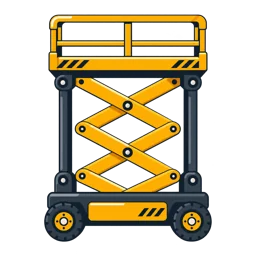
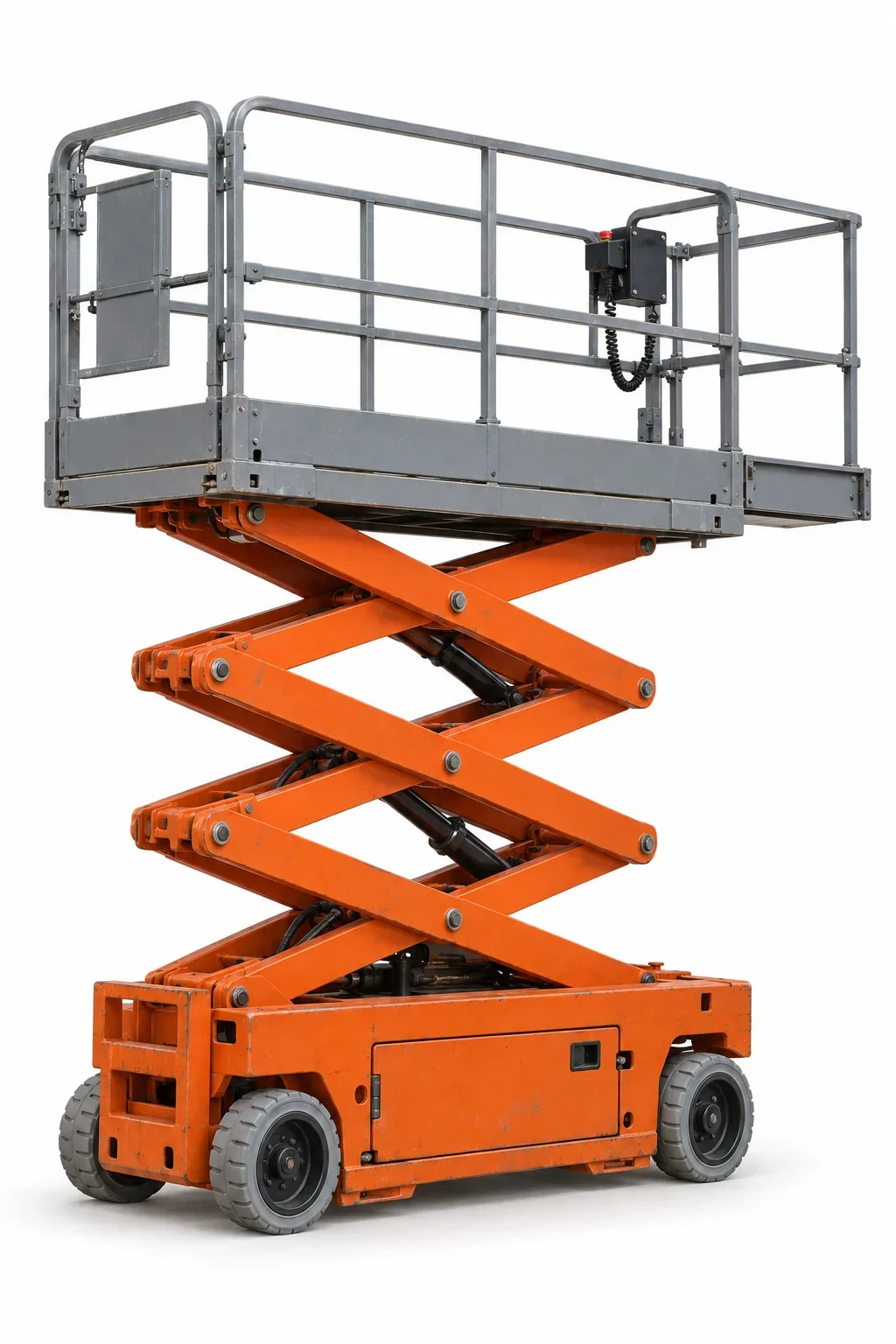
Geometry and site factors that drive selection
- Can the unit sit below the task without reaching over obstacles? Rough-terrain scissors excel when the work is straight up from the machine.
- What is the working height and platform capacity requirement? Taller facades and outdoor equipment maintenance often push toward higher platforms with room for materials.
- How uneven is the route? Map ruts, grades, and soft zones from staging to the work area.
Why local terrain changes the choice
- Expansive clay soils can become soft or slick after rain. Traction-oriented drive, ground clearance, and wider tires help maintain mobility on unfinished pads.
- Mixed industrial sites may require crossing compacted base, crushed stone, and short paved sections. A rough-terrain scissor keeps movement consistent across these transitions.
- Summer heat and humidity increase wear considerations; planning fewer relocations and shorter travel paths helps keep cycles predictable.
Constraints that narrow the model
- Platform size vs. approach lanes: Wider platforms are efficient on open pads, but tight utility corridors may require a narrower machine.
- Grade variability: Steeper approaches and uneven staging zones point toward models emphasizing stability on irregular ground.
- Indoor tie-ins: If the job links to interior work, stage an electric unit inside at /electric-scissor-lift-rental/ to protect finished floors.
When a boom lift fits better
If the machine cannot sit under the task due to awnings, conveyors, or protrusions, an articulating or telescopic boom at /boom-lift-rental/ or /aerial-lift-rental/ provides up-and-over capability.
Supporting equipment
Exterior projects often need site power or lighting for early starts or evening work. Plan complementary rentals at /generators-light-towers-rental/.
Actual conditions, the selected unit’s instructions, and site procedures govern exterior work. Confirm route stability before moving any unit across wet clay or newly graded areas.