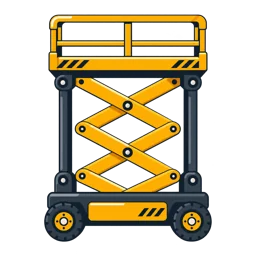
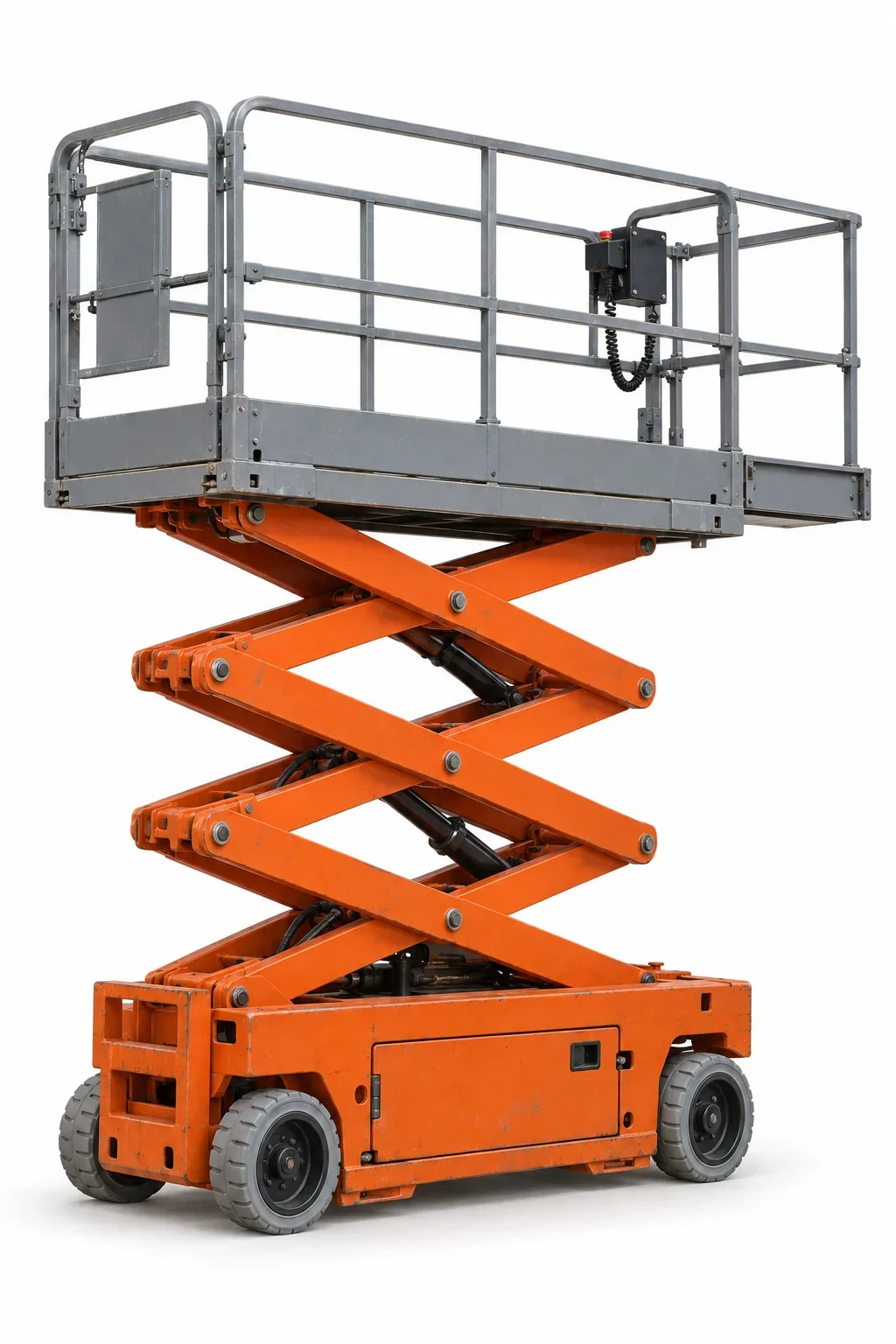
Job geometry that defines an electric scissor
- Working height: Confirm the height of fixtures, duct runs, and lighting. Platform height plus operator reach should meet the target without overextending.
- Access limits: Measure the narrowest points—interior doors, pallet rack aisles, and elevator cars—to set maximum machine width and stowed height.
- Turn radius and staging: Note intersections in racking, mezzanine posts, and floor drains that can pinch turns or complicate parking.
Why Waco interiors favor electric slab units
- Many local distribution buildings and industrial sites use polished or sealed concrete. Non-marking tires and electric drive protect finishes and reduce noise.
- High humidity and summer heat raise the value of indoor, low-emission equipment to keep air clearer around occupied work zones.
- Facility upgrades and production line changeouts often require repeated up-down cycles in confined lanes, where compact platforms save time.
Constraints that narrow the model
- Floor capacity: Finished slabs vary by area; heavier units may be limited to main aisles.
- Platform size vs. obstruction density: Dense piping or conduit may favor a narrower deck to snake between lines, while wide, open bays support larger platforms for tools and materials.
- Charging access: Identify where units can be staged near power during off-hours; for mixed indoor/outdoor projects, keep electric units inside and pair exteriors with /rough-terrain-scissor-lift-rental/.
When an electric scissor isn’t the best fit
- If the machine cannot sit directly below overhead work because of conveyors or equipment, consider an articulating boom at /boom-lift-rental/.
- Very tight, point-access tasks may align with a vertical mast at /vertical-mast-lift-rental/.
- Material placement at moderate height may be more efficient with /forklift-rental/ or /telehandler-rental/ supporting the crew.
Site conditions govern use
Actual floor conditions, equipment instructions, and site procedures determine where each unit can operate. Plan routes that avoid wet entries from exterior clay areas to keep floors dry and traction predictable.